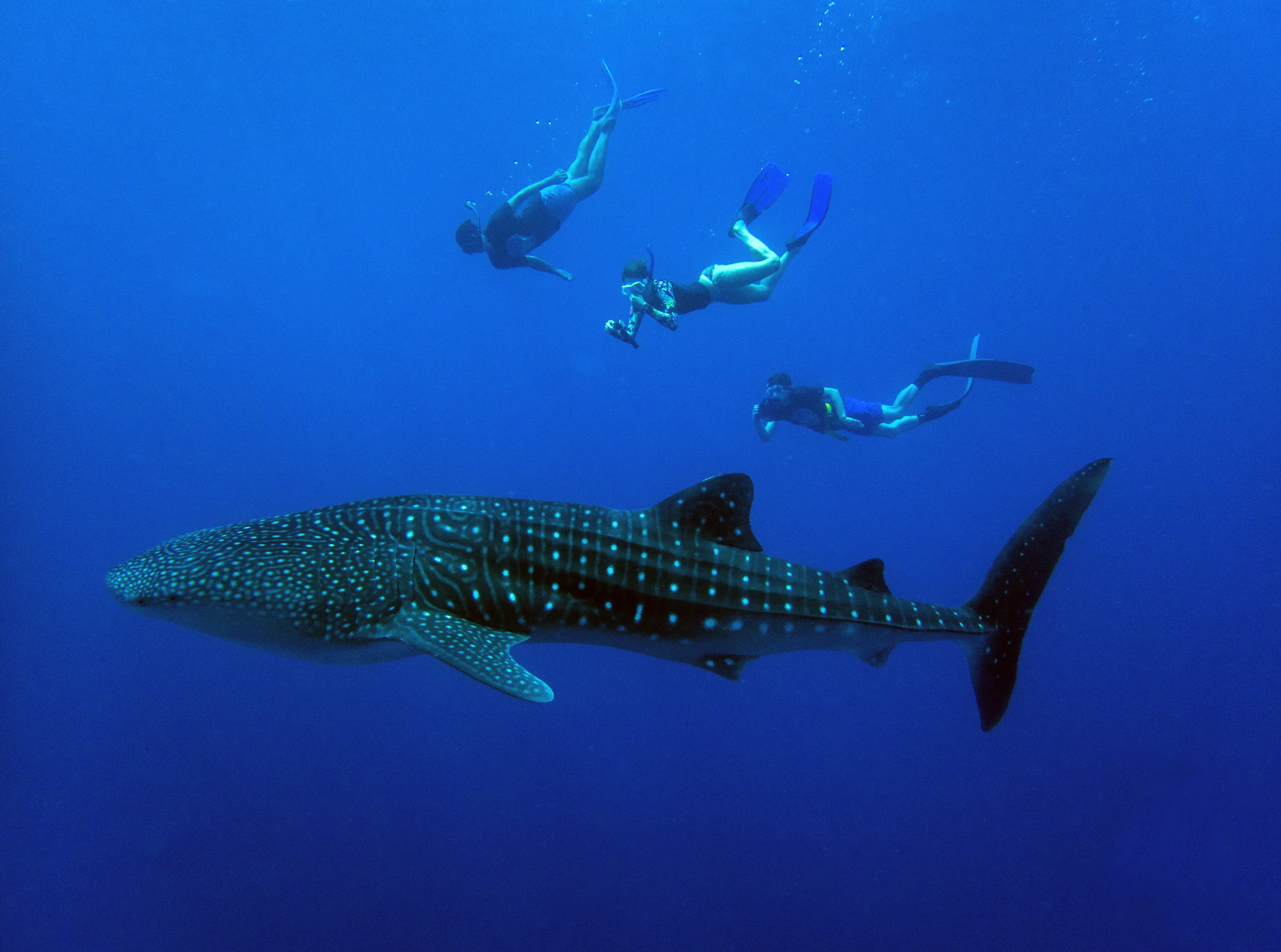
Imagine slipping into warm, crystal-clear water. The only sounds are your own breathing and the gentle movement of the ocean. Then, emerging from the deep blue beneath you, appears a fish larger than a bus — moving effortlessly through the water with remarkable calm. Despite its enormous size it poses no threat; it simply glides gracefully past, surrounded by colourful reef fish, completely indifferent to the swimmers sharing the ocean.
For many travellers, this is one of the most unforgettable moments of a Maldives holiday. Swimming alongside a whale shark isn't just another excursion — it's a rare chance to meet the world's largest fish in its natural environment, an experience that leaves even seasoned travellers speechless. The Maldives is one of the few places on Earth where whale sharks can be encountered all year round in certain regions, making it one of the world's premier destinations for this remarkable wildlife experience. If you're wondering whether it belongs on your itinerary, this guide answers everything you need to know before you go.
Quick answer: Yes — if marine life is one of the reasons you're visiting the Maldives, swimming with whale sharks is well worth it. They can be encountered year-round around South Ari Atoll, home to the only known resident population of juvenile whale sharks in the world. Sightings can never be guaranteed, but choosing the right atoll, travelling in favourable conditions and joining a responsible operator greatly improves your chances. Most excursions are done by snorkelling (no diving needed) and cost roughly $80–$250 per person.
What Exactly Is a Whale Shark?
Despite the name, a whale shark isn't a whale — it's a shark, and in fact the largest fish in the world, capable of growing beyond 12 metres (40 feet), with exceptional individuals larger still. The ones you'll typically see in South Ari are juveniles, usually around 5–10 metres — still an astonishing size up close. Fortunately, size is where the intimidation ends. Whale sharks are gentle filter feeders: rather than hunting, they feed on plankton, tiny fish and microscopic organisms by filtering enormous volumes of water through their mouths. Their pattern of white spots is unique to every individual, like a fingerprint, which lets marine researchers identify and monitor them throughout their lives.
Why the Maldives Is One of the Best Places to See Whale Sharks
Many destinations offer seasonal whale shark encounters. The Maldives is different. Warm tropical waters, rich marine ecosystems and favourable currents mean whale sharks can be encountered year-round in certain regions. The best-known location is South Ari Atoll, where juvenile whale sharks feed close to the reef in every month of the year — the only documented resident juvenile population anywhere in the world. That consistency has made the Maldives a global leader in responsible whale shark tourism. No wildlife encounter can ever be guaranteed, but few places on Earth offer such reliable chances to meet these animals in the wild.

Where Can You Swim with Whale Sharks?
While whale sharks occasionally appear elsewhere in the Maldives, most excursions focus on South Ari Atoll — specifically the South Ari Marine Protected Area (SAMPA), declared in 2009 to safeguard the whale sharks that live along the atoll's southern rim. Resorts in or near the atoll run dedicated whale shark trips, often with experienced marine guides who track recent sightings, sea conditions and local movement patterns to give you the best possible chance.
💡 Expert insight: choose your atoll before your resort. If seeing whale sharks is one of the main reasons you're visiting the Maldives, don't leave it until after you've picked your resort. Not every resort has the same access to whale shark areas. Staying in or near South Ari Atoll usually means shorter boat journeys and more regular excursions — so it's worth deciding what experiences matter most before choosing where to stay. A resort that's perfect for a diving holiday may not be the best base if whale sharks are top of your wish list.
When Is the Best Time to See Whale Sharks?
One of the great advantages of South Ari Atoll is that whale sharks are present year-round, so there's no closed season. That said, conditions shift through the year. The dry season (roughly December to April) tends to bring calmer seas and better surface visibility, while the wetter months (around May to November) bring plankton blooms that concentrate feeding activity. Either way, reputable operators report consistently high sighting success across the year. The one thing to remember: whale sharks are wild animals, and no ethical operator can ever promise a sighting — that uncertainty is exactly what makes every encounter feel so extraordinary.
Related reading: When Is the Best Time to Visit the Maldives?
What Happens During a Whale Shark Excursion?
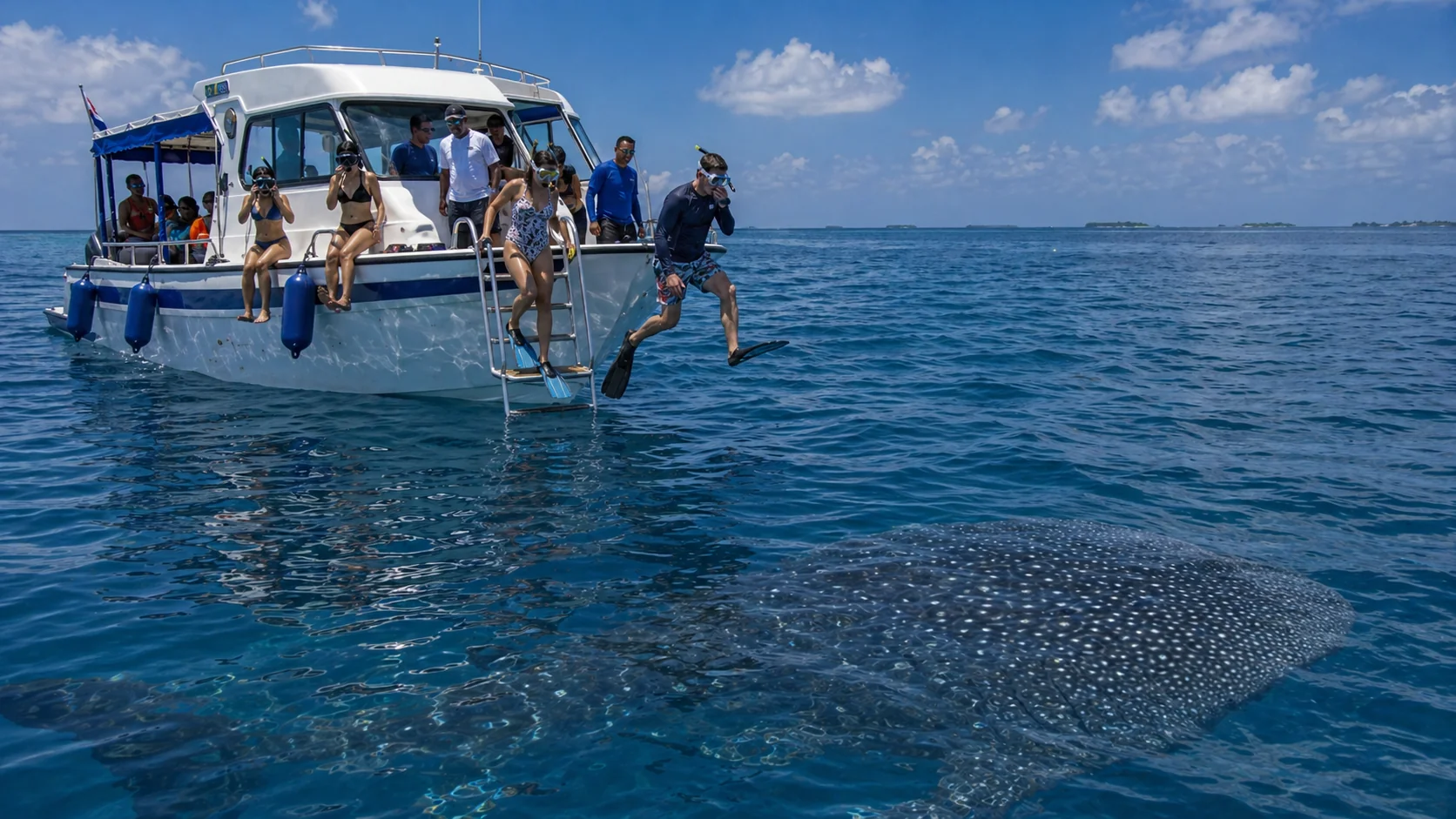
After a safety briefing you'll board a boat and head towards areas where whale sharks have recently been seen. Guides continuously scan the ocean and stay in contact with other boats and marine spotters. When a whale shark is located, the boat positions itself ahead of the animal's path, and guests enter the water under the guide's supervision to snorkel alongside it while keeping a respectful distance. Most encounters last only a few minutes. There are no performances, no feeding and no artificial interactions — just the privilege of sharing the ocean with one of nature's most extraordinary creatures.

Is It Safe?
Yes. Whale sharks are gentle filter feeders and are not considered dangerous to humans — the main consideration is usually sea conditions rather than the animal itself. Experienced guides give clear instructions covering safe entry into the water, where to position yourself, the correct viewing distance and responsible wildlife behaviour. Following them keeps the experience safe and enjoyable for both visitors and the whale sharks.
Responsible Wildlife Encounters Matter
Swimming with whale sharks is a privilege, and protecting them is a responsibility. Because South Ari is a protected area, responsible operators follow an internationally recognised code of conduct designed to minimise disturbance and support long-term conservation. You can help by following these guidelines:
- Keep at least 3 metres away from the whale shark's body (and around 4 metres from its tail).
- Never touch the animal, and never block its path.
- Swim to the side, parallel to the shark — never head-on.
- Avoid sudden movements and don't use flash photography.
- Follow your guide's instructions at all times (operators limit numbers, often to around eight swimmers per shark).
- Choose reef-safe sunscreen wherever possible.
Responsible tourism helps ensure future generations will also get to experience these remarkable animals.

What Should You Bring?
For the most comfortable experience, consider packing:
- Swimwear and a rash guard or UV swim shirt
- Reef-safe sunscreen
- Towel and sunglasses
- Reusable water bottle
- Waterproof phone pouch
- GoPro or underwater camera (no flash)
Most resorts and operators provide snorkelling equipment, though many travellers prefer bringing their own mask for a better fit.
Should You Choose Your Resort Based on Whale Sharks?
If seeing whale sharks is one of your highest priorities, absolutely. Choosing the right atoll often matters far more than choosing a more expensive resort elsewhere — a well-placed resort with easy access to South Ari can offer significantly better opportunities than a luxury property several atolls away. It's another reason to decide what you want to experience before deciding where to stay.
How Zaha Travels Helps You Experience More Than Just the Destination
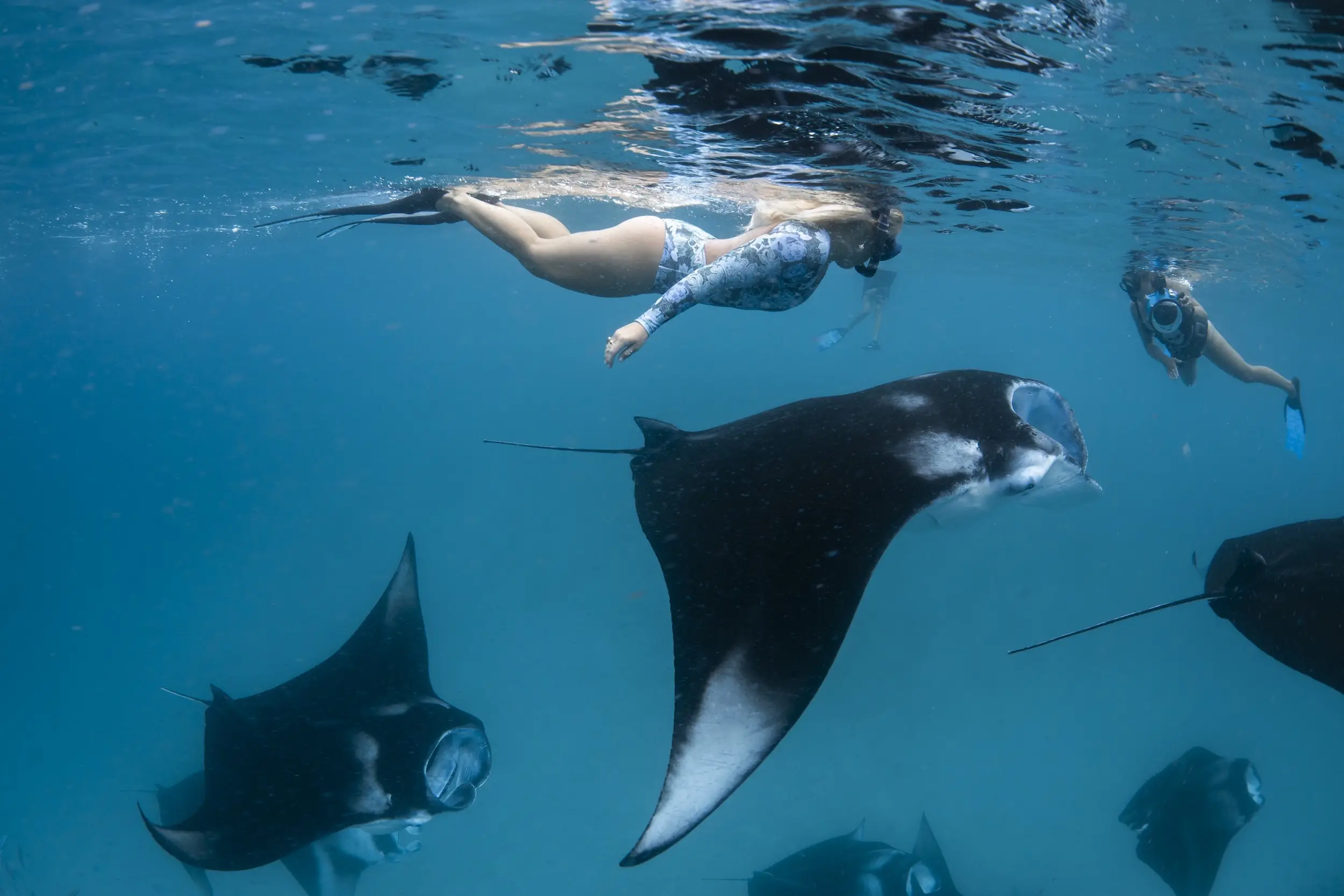
We believe the most memorable holidays aren't defined by the room you stay in — they're defined by the moments you experience. So we don't simply recommend resorts by popularity or star rating; we start by understanding what excites you. If swimming with whale sharks is on your bucket list, we'll weigh factors such as the best atolls for encounters, resorts with convenient access to excursion areas, your preferred travel season, whether you want to snorkel or dive, and any other marine experiences you'd love — manta rays, turtle snorkelling or dolphin cruises. Our intelligent resort-matching system analyses those preferences across our partner network, and your travel expert then refines the recommendations with first-hand destination knowledge. The result isn't just a resort — it's a holiday designed around the experiences you'll remember for years.
Final Thoughts
Swimming alongside the world's largest fish is one of those rare experiences a photograph can never fully capture. It isn't about adrenaline or ticking off a bucket list — it's about sharing a few unforgettable moments with one of the ocean's most extraordinary creatures in its natural home. Some travellers return from the Maldives talking about the villa; others remember the sunsets. But for many, the moment they watched a whale shark glide silently beneath them became the memory that defined the entire journey.
Whale Shark FAQs
Will I definitely see a whale shark?
No — whale sharks are wild animals, so sightings can never be guaranteed. That said, South Ari Atoll offers some of the most reliable year-round chances in the world, and choosing the right atoll and an experienced operator improves your odds considerably.
How much does a whale shark excursion cost?
As a guide, guesthouse-based snorkelling trips run roughly $80–$150 per person, while resort-run excursions are typically $120–$250 per person. Scuba options cost a little more.
Do I need to scuba dive?
No. Most whale shark encounters in the Maldives happen while snorkelling — the sharks often cruise shallow enough that snorkelling is actually the better view.
Is it suitable for beginners?
Yes. Many excursions welcome first-time snorkellers, provided you're comfortable in the water and follow your guide's instructions.
When is the best time of year to go?
South Ari has whale sharks year-round. December to April brings calmer seas and clearer surface water; May to November brings plankton blooms and strong feeding activity. There's no bad time.
Are whale sharks protected in the Maldives?
Yes. Whale sharks are a protected species in the Maldives, and South Ari sits within the South Ari Marine Protected Area (SAMPA). Responsible tourism plays an important role in their conservation.